01
WRAP
Worldwide Responsible Accredited Production
Independent social-compliance certification for sewn-product facilities. The certificate identifies the responsible workplace practices assessed, named factory and certification period.
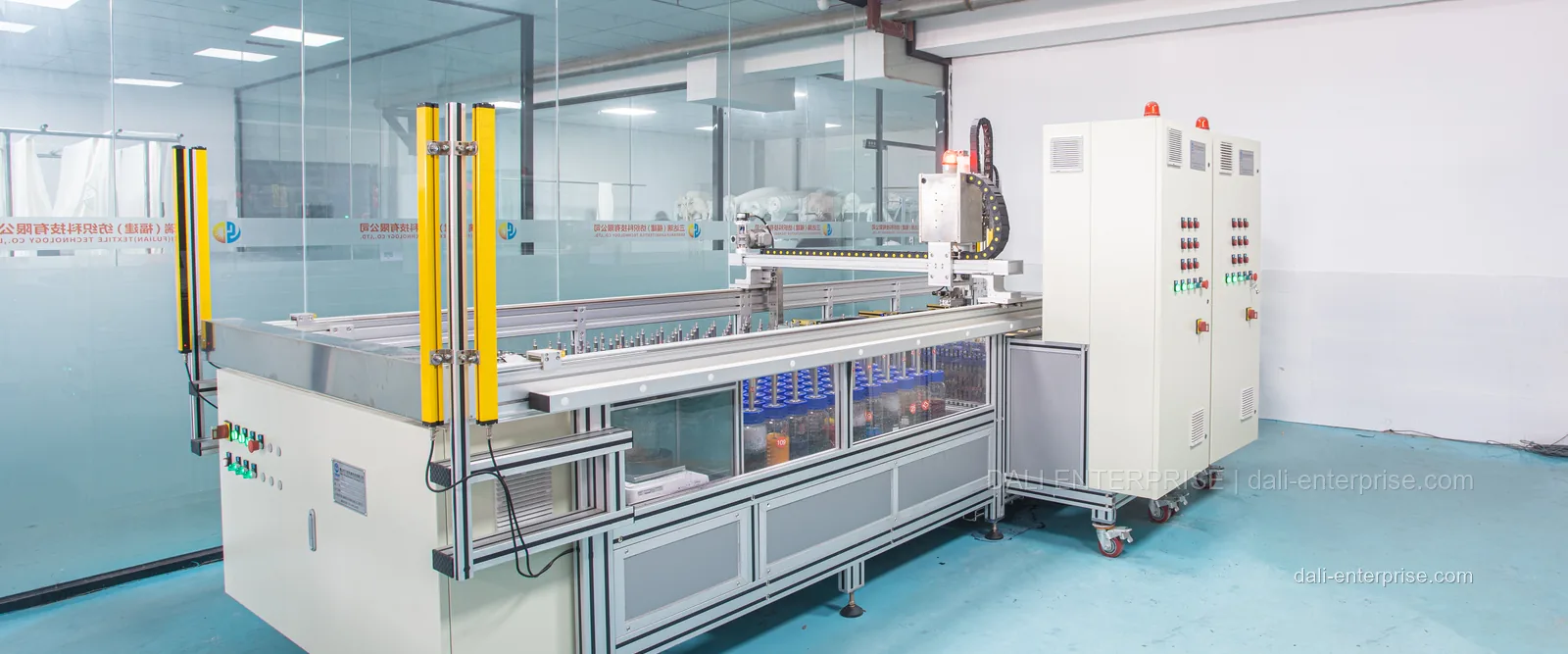
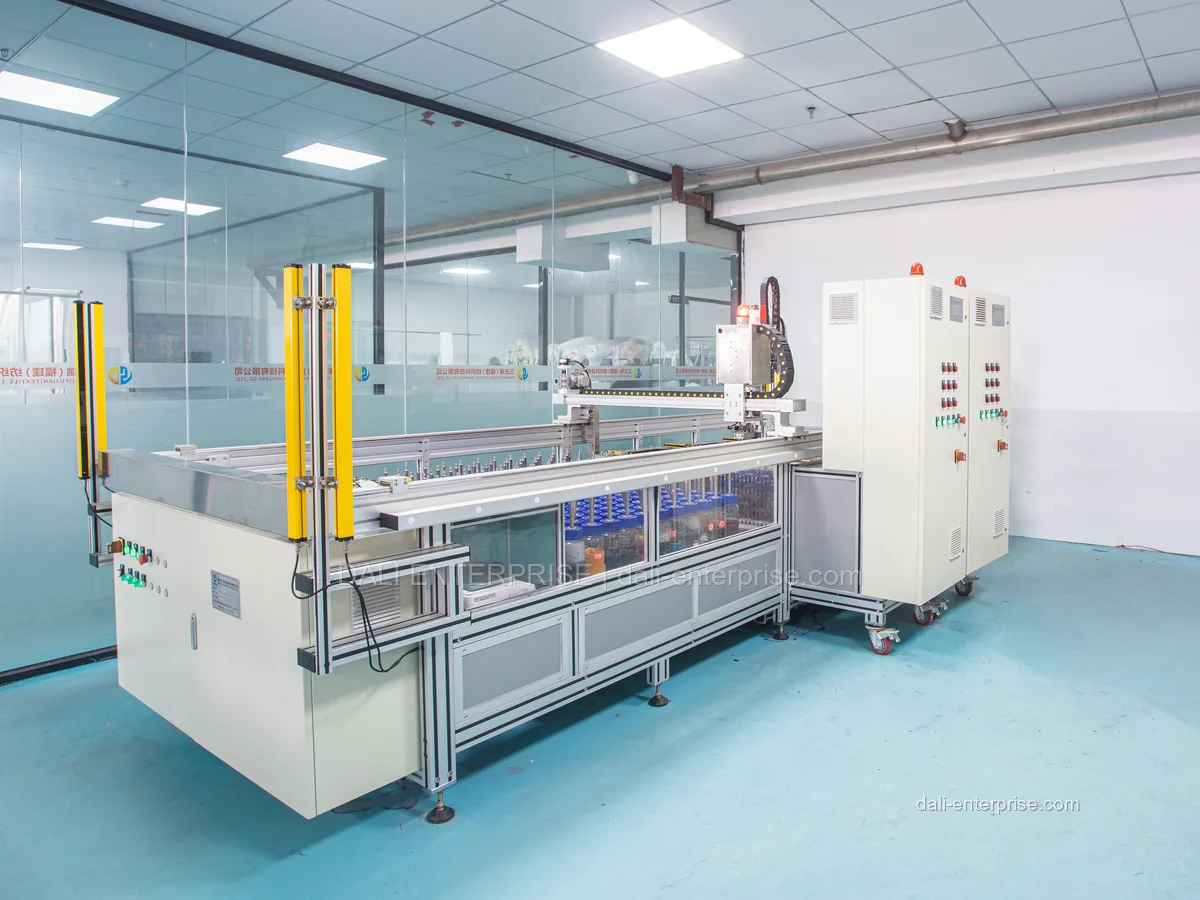
Review construction, colour, composition and relevant testing before the material is committed to production.
Bring fit, workmanship, trims and packaging into an agreed reference for the production team.
Use in-line checks and production records to identify issues while work is in progress.
Review the finished order against agreed inspection criteria, including third-party inspection when requested.
The in-house laboratory supports development and production decisions. The required test programme follows the product brief, destination market and customer's agreed standards.
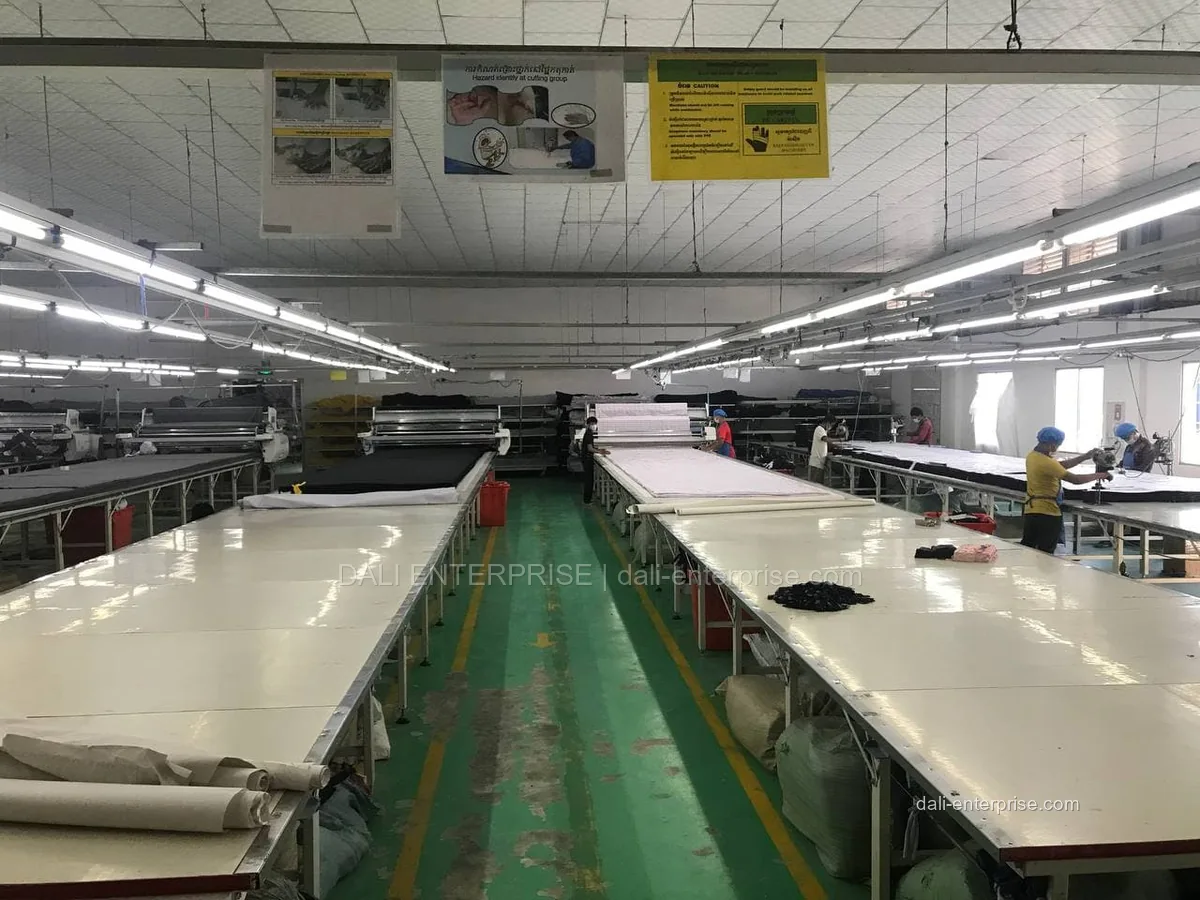
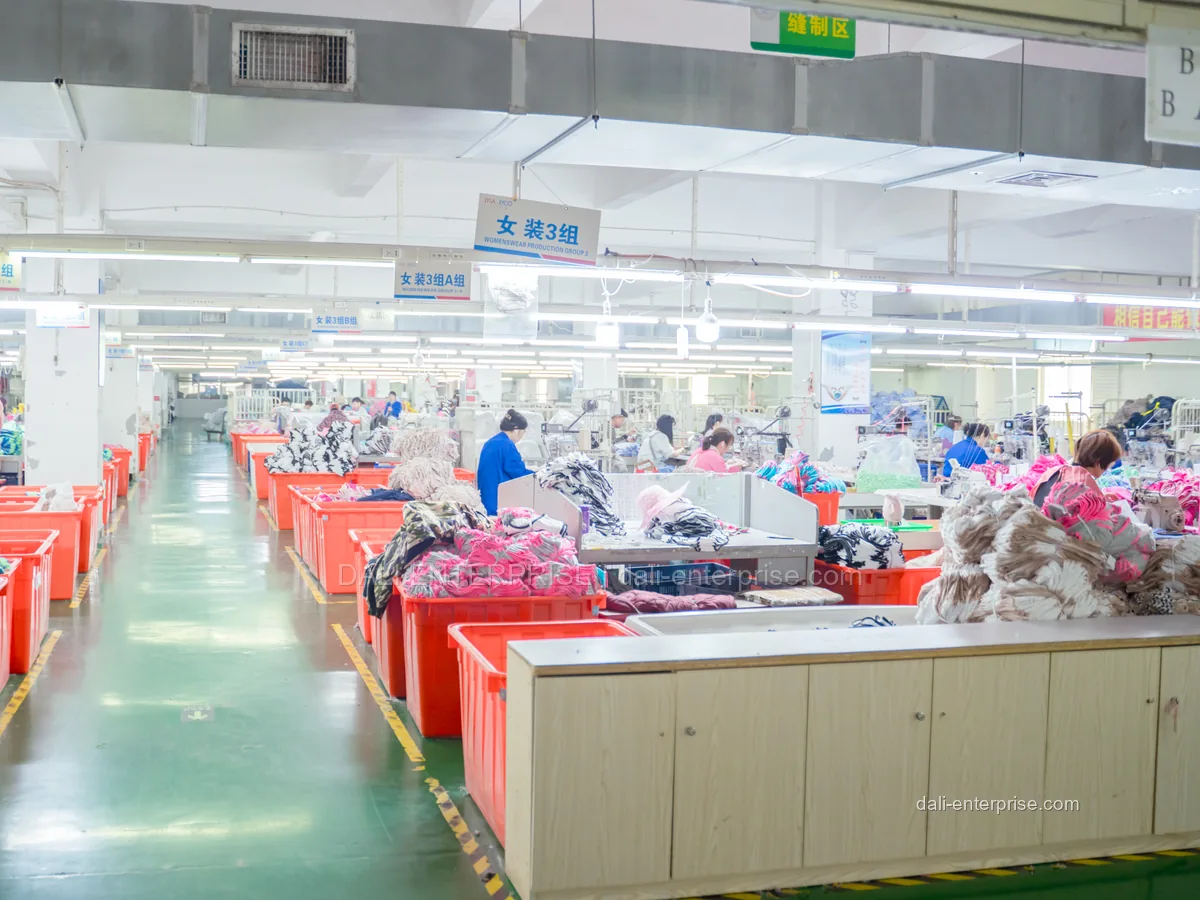
In-line checks address workmanship during production; final inspection compares the order with approved samples and specifications. AQL 1.0–2.5 is applied according to the agreed inspection standard. Third-party inspection can be coordinated for the programme.
AUDITS, CERTIFICATIONS & ASSESSMENTS
DALI’s manufacturing portfolio brings together factory audits, textile and material standards, sustainability assessments and management systems. Explore all 18 references below, with an explanation of what each addresses.
Responsible workplace practices, factory assessment and improvement.
01
Worldwide Responsible Accredited Production
Independent social-compliance certification for sewn-product facilities. The certificate identifies the responsible workplace practices assessed, named factory and certification period.
02
Initiative for Compliance and Sustainability
A retailer-led initiative using social and environmental audits to improve conditions in supply-chain factories. The review concerns the assessed workplace and its improvement actions.
03
Business Social Compliance Initiative
A social-performance monitoring and improvement system for supply chains. Factory audits consider working conditions and corrective actions; the audit report belongs to the assessed production site.
04
Sedex Members Ethical Trade Audit
Sedex’s social-audit methodology covering labour standards, health and safety, and the applicable environmental and business-ethics scope. The report states the audit type, site and findings.
05
Better Work programme
Better Work’s programme in Cambodia, run by the ILO and IFC. Factory assessments, advisory work and training address working conditions; the applicable records identify the participating factory.
Facility-level information used to evaluate social or environmental performance.
06
Environmental and social performance assessment tools
Sustainability assessment tools for facilities and other parts of the value chain. The relevant module, reporting period and verification status identify what a facility assessment covers.
07
Social & Labor Convergence Program
A converged framework for collecting and verifying facility-level social and labour information. It supports shared assessment data rather than serving as a product certificate.
Textile safety, organic and recycled inputs, and responsible material sourcing.
08
Textiles tested for harmful substances
Testing and certification for textiles assessed against harmful-substance criteria. The named article, product class and certificate scope determine which materials or products are covered.
09
Better Cotton Initiative
A cotton-production and sourcing initiative with requirements for farming practices and the supply chain. The applicable sourcing model and records determine how a cotton claim is supported.
10
Global Organic Textile Standard
A standard for textiles made with certified organic fibres, including processing, environmental and social requirements. The certified stages and relevant product documentation define the scope.
11
Global Recycled Standard
A standard verifying recycled material and chain of custody, with additional processing, social, environmental and chemical requirements. Scope and transaction records connect claims to the relevant material.
12
Recycled Claim Standard — blended category
The blended label category within the Recycled Claim Standard, used to verify recycled input and its chain of custody. The declared content and supporting records apply to the specific material.
13
Recycled Claim Standard — 100 category
The RCS 100 label category within the Recycled Claim Standard. The label category does not replace the declared recycled percentage or the material’s applicable certification and transaction records.
14
Forest Stewardship Council
Responsible forest-based material and chain-of-custody references, relevant where paper, packaging or other forest-derived inputs are specified. The actual material claim and supply-chain scope are reviewed.
15
Organic Content Standard — blended category
The blended label category within the Organic Content Standard, tracking certified organic material through the supply chain. It verifies organic content and custody for the covered material.
16
Organic Content Standard — 100 category
The OCS 100 label category within the Organic Content Standard. Organic-content declarations and supply-chain records are checked for the material; the label is separate from finished-product testing.
Quality, environment, and occupational health and safety management.
17
GB/T 19001 · GB/T 24001 · GB/T 45001
Chinese management-system references covering quality management, environmental management, and occupational health and safety. Each document identifies the organisation, site and certified activities.
18
ISO 9001 · ISO 14001 · ISO 45001
International management systems for quality (9001), environment (14001), and occupational health and safety (45001). Certification concerns the named organisation and activities rather than every finished product.
Start with the proposed factory and the requirement named in your supplier approval. The relevant certificate or assessment identifies its site, scope and period; programme information alone does not establish product coverage.
Supporting records are matched to the factory, activity, material and product proposed for your order. Document dates and coverage are reviewed during supplier approval.
Q1 2027
Life and Building Safety (LABS) is a target for the new Cambodia campus in Q1 2027. It is shown separately from the 18 existing portfolio references and remains a planned milestone.
DALI supports factory visits and audit coordination for brand and retail sourcing teams. Share any named programme or buyer requirements so the relevant site records, audit scope and material documents can be prepared for review.
Discuss audit requirementsPEOPLE & RESPONSIBLE OPERATIONS
DALI's employment commitments include a minimum hiring age of 18, no forced labour and wages above the legal minimum.
Free on-site clinic provision, workplace safety and training support employee wellbeing and practical skills development.
Factory teams work on process and environmental practices. The additional campus has solar generation and energy storage in its development plan; these are not reported as commissioned systems.
MATERIALS & PRACTICAL CONTROL
Connect material claims, factory review and production decisions to the specific programme. Group references do not replace order-level approval.
Agree the fibre composition and requested recycled or organic claim before labels are approved. Review the relevant material and supply-chain documents; a portfolio certification reference does not make every fabric or garment certified.
Review fabric specificationsThe Fujian operation has invested in water-treatment facilities. Review environmental records for the named site alongside the colour, shrinkage, strength or stretch checks agreed for the product.
Follow the quality processMatch workplace and audit documents to the proposed factory. For the additional Cambodia campus, review its operating stage separately; LABS, solar and storage remain development targets.
See the current campus statusIt connects material checks, sample approval, in-line inspection and final inspection against the agreed specification. Test methods, tolerances and acceptance criteria are set for the product and buyer requirements.
See production quality checksThe documented test groups cover colour fastness, pH, shrinkage and dimensional stability, and bursting strength where applicable. The required tests depend on the material, product and intended market.
See the textile testing programmeScope must be checked for the relevant factory, material and document. Factory social compliance audits and material certifications serve different purposes; a group-level name list does not prove that every site or product has the same current coverage.
Review audit and certification scopeSTART A MANUFACTURING PROJECT
Tell us the product, expected volume and destination. Our team can discuss development and the manufacturing route with you.